By
By 
The International Baccalaureate Primary Years Programme (IB PYP) builds a strong educational foundation for young learners. Many families choosing an international school in Singapore consider the IB PYP for its consistent framework and global recognition. Understanding how the programme works helps parents prepare children for learning that focuses on inquiry, reflection, and personal growth.
Understanding the IB PYP Framework
The IB PYP in Singapore introduces learning through active exploration, guiding students aged three to twelve through a structured yet flexible curriculum. Teachers encourage children to ask questions, examine problems, and build connections across subjects. The programme promotes conceptual understanding over rote memorisation.
Instead of relying on textbooks alone, students engage in transdisciplinary themes. These broad themes span across science, mathematics, languages, arts, and social studies. Every subject links back to a real-world context, helping children see purpose in their learning. Classroom activities promote collaboration, independent thinking, and curiosity.
The programme’s structure supports six key transdisciplinary themes. These include identity, expression, global responsibilities, place and time, innovation, and natural systems. Each theme allows students to investigate topics through multiple lenses. Teachers observe how students apply thinking to practical tasks, not how fast they recall content.
Learning Environment at a Singapore International School
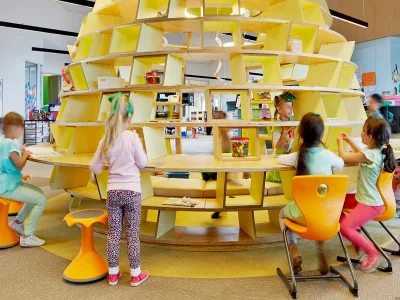
An international school in Singapore offering the IB PYP focuses on creating a stimulating, inclusive learning space. Classrooms remain learner-centred, with students participating in hands-on tasks, group discussions, and guided projects. The layout, materials, and learning tools support active inquiry.
Educators collaborate to align their strategies across grade levels. This alignment ensures continuity and coherence as students move up each year. Regular formative assessments help teachers adjust instruction to meet student progress. Feedback remains ongoing, not reserved for final exams or summative tests.
Many IB PYP schools also integrate language support, arts, sports, and community involvement into daily routines. These elements strengthen social-emotional development and confidence. Students grow not just in academic ability, but also in cultural awareness, teamwork, and problem-solving.
Parents often notice that children participating in the IB PYP communicate thoughts more clearly, ask deeper questions, and express opinions with confidence. These outcomes reflect the programme’s emphasis on developing lifelong learners who value reflection, compassion, and open-mindedness.
Parental Role and Involvement in the IB PYP
Parents play an active role in supporting children under the IB PYP in Singapore. Teachers encourage parents to understand the unit of inquiry and participate in learning whenever possible. Weekly newsletters, classroom updates, and parent-teacher conferences promote regular communication.
At home, parents support inquiry by listening to their child’s questions and encouraging exploration. Instead of giving immediate answers, parents help children think critically and research independently. This approach builds consistency between home and school learning styles.
Parents also join events and exhibitions where students present learning outcomes. These presentations reinforce communication skills and promote a sense of achievement. Parental involvement boosts motivation, shows interest in the child’s academic journey, and reinforces school values.
Some international schools in Singapore also offer workshops or orientation sessions to help families grasp IB PYP concepts. These sessions outline the curriculum design, assessments, and expectations. Engaging with these resources helps parents stay informed and responsive to student needs.
Assessment and Progress Reporting
Assessment under the International Baccalaureate Primary Years Programme focuses on demonstrating understanding rather than recalling facts. Teachers observe how students apply knowledge in different contexts. Children use self-assessment tools, reflect on feedback, and revise work for improvement.
Portfolios document student progress throughout the year. These include written pieces, project samples, art, and reflection journals. Each entry shows how students apply skills over time. Parents access these portfolios during conferences or online platforms to track development.
Reporting avoids grades or rankings. Instead, educators provide descriptive feedback showing strengths, areas for growth, and learning habits. This narrative style aligns with the PYP belief in fostering intrinsic motivation over external rewards.
Towards the end of the programme, students participate in the PYP Exhibition. This project requires identifying a global issue, conducting research, collaborating with peers, and sharing findings. It marks a key milestone, demonstrating readiness to move into the middle years.
Conclusion
Parents considering the IB PYP in Singapore should expect a child-focused approach that promotes inquiry, personal growth, and global-mindedness. The International Baccalaureate Primary Years Programme provides an immersive, forward-thinking education that develops skills beyond standard academics.
Contact ISS International School to explore how the IB PYP in Singapore supports your child’s learning journey at a leading international school in Singapore.